
MVP Development: Building Smart, Fast, and Lean
In the world of software product development, the Minimum Viable Product (MVP) is one of the most powerful concepts for turning an idea into a successful reality. An MVP is not simply a "rough draft" or a "half-finished product"—it is a strategic approach to learning, validation, and rapid iteration. It allows teams to test their assumptions, gather real user feedback, and reduce the enormous risk of building something nobody wants.
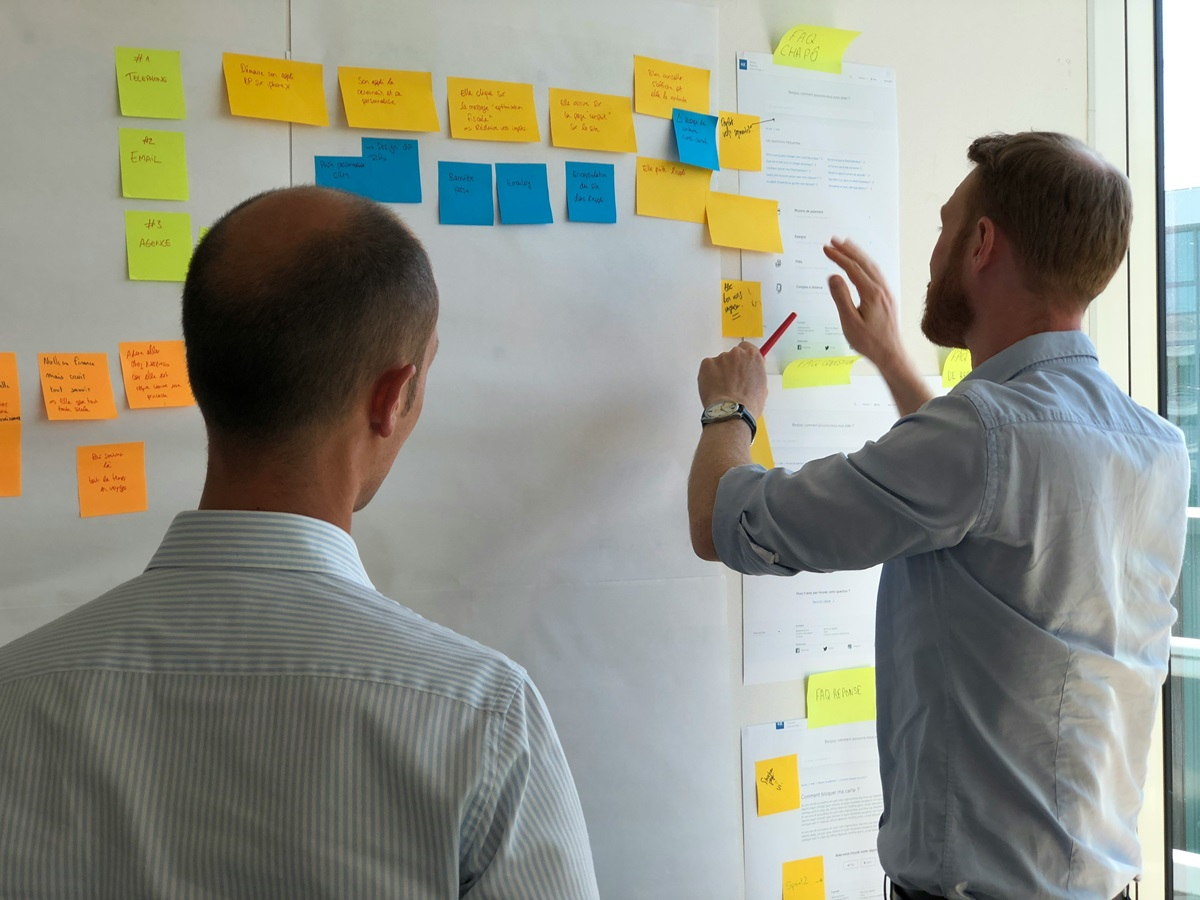
The MVP philosophy has its roots in lean startup methodology, popularized by Eric Ries. It emphasizes building the smallest possible version of your product that can deliver value to early adopters and generate actionable insights. In an era where speed-to-market and customer-centricity are paramount, MVP development has become the gold standard for innovators, entrepreneurs, and established enterprises alike.
What is an MVP?
A Minimum Viable Product is the version of a new product that allows a team to collect the maximum amount of validated learning about customers with the least amount of effort. It is not a minimal product—it's a strategic product designed specifically for learning.
Defining the "Minimum"
The "minimum" does not mean the cheapest, ugliest, or fastest possible implementation. Instead, it means:
- Core Value: It must deliver the core value proposition—the primary reason a user would care about the product.
- Essential Features: It includes only the features necessary to test the product hypothesis and gather feedback.
- No Frills: All nice-to-have features, advanced functionality, and polish are deferred to future iterations.
Defining "Viable"
The "viable" component means the product must actually work and provide enough value that users are willing to use it and provide feedback. It must be:
- Functional: It works reliably for its core purpose.
- Usable: Users can understand it and accomplish their goals.
- Desirable: Enough of the target audience wants it and is willing to adopt it.
What an MVP is NOT
- A Prototype: Prototypes are often used internally for testing concepts and are not released to real users. An MVP is a real, functional product that real users interact with.
- A Beta Release: A beta is a nearly complete product with most features, released to a limited audience for final testing. An MVP is deliberately minimal.
- An Unfinished Product: An MVP is not simply a "cut-down" version of a complete product released too early. It is a thoughtfully designed product specifically for learning.
- "The Final Product": An MVP is a starting point, not an endpoint. It is the first step in a journey of continuous iteration and improvement.
Why Build an MVP?
The MVP approach delivers powerful benefits for product development.

Validate the Product Hypothesis
Before an MVP, you have an assumption that your product will solve a problem for users. An MVP allows you to test this hypothesis with real users in the real market. You learn whether you're building the right product, rather than building a product right.
Reduce Risk and Waste
According to research, 42% of startups fail because they build products nobody wants. By building small and learning fast, you avoid spending significant time and money on a product that ultimately fails.
Accelerate Time to Market
An MVP can be launched in weeks or months, rather than years. This allows you to capture market opportunities, attract early adopters, and start learning sooner.
Attract Early Adopters and Funding
Early adopters are often willing to engage with an MVP and provide valuable feedback. A working MVP also signals credibility to investors, making it easier to secure funding.
Build a Foundation for Continuous Learning
An MVP sets up a build-measure-learn feedback loop. Each iteration provides data and insights, informing the next set of decisions.
Focus on the Core Value Proposition
The MVP forces you to define and prioritize what truly matters to users. This clarity often leads to stronger, more focused products.
The MVP Development Lifecycle
Building an MVP follows a structured process that balances speed with learning.
Phase 1: Define the Problem and Vision
Before any development, define clearly what you're trying to achieve.
- Problem Statement: What problem are you solving? Who has this problem?
- Value Proposition: What unique value does your solution provide?
- Target Audience: Who are your early adopters? What do they need?
- Success Metrics: How will you measure success? (e.g., user signups, engagement, retention, revenue)
Phase 2: Ideation and Feature Prioritization
This is where you decide what to build and, just as importantly, what not to build.
- Brainstorm All Features: Generate a complete list of possible features.
- Categorize by Value: Which features are absolutely core to the value proposition? Which are nice-to-have?
- Create an Impact-Effort Matrix: Plot features based on impact (value to users) and effort (time, complexity).
- The 80/20 Rule: Identify the 20% of features that will deliver 80% of the value.
Prioritization Frameworks:
- MoSCoW Method: Must-have, Should-have, Could-have, Won't-have (this time).
- Kano Model: Categorizes features based on how they affect user satisfaction (basic needs, performance needs, delighters).
- RICE Method: Scores features on Reach, Impact, Confidence, and Effort.
Phase 3: Define the MVP Scope
With priorities clear, define exactly what will be in the MVP.
- Core User Flow: What is the simplest path a user takes to derive value? Everything else is secondary.
- Acceptance Criteria: Define what "done" means for each feature.
- Non-Functional Requirements: Performance, security, and reliability expectations. Some can be minimal, but basic standards are essential.
Phase 4: Design and Prototype
Design for MVPs focuses on usability and speed, not pixel-perfect polish.
- Rapid Prototyping: Create low-fidelity prototypes (wireframes, mockups) to test flows.
- User Testing: Validate your assumptions with a few potential users before building.
- Minimal Design: Clean, functional design that communicates the product's purpose. Avoid over-investing in design at this stage.
- Design Systems: If you have them, leverage them for speed.
Phase 5: Development
Building the MVP requires focus, speed, and pragmatism.
- Choose the Right Tech Stack: Select technologies that enable rapid development. Frameworks like Ruby on Rails, Django, and React offer speed. Consider low-code or no-code tools where appropriate.
- Agile Methodology: Work in short sprints with frequent check-ins.
- Third-Party Integrations: Leverage existing APIs and services (authentication, payment, analytics) instead of building from scratch.
- Quality Assurance: Balance speed with quality. Prioritize critical paths that must work flawlessly and don't break for early users.
- Feature Flags: Use feature flags to control feature rollout.
Phase 6: Launch
The launch of an MVP is not a "big bang" event—it's the beginning of the learning journey.
- Target Early Adopters: Reach out to a specific audience likely to be early adopters.
- Soft Launch: Consider a soft launch to a limited group first to identify any major issues.
- Marketing and Communication: Clearly communicate what the product is, what it does, and the vision for the future.
- Analytics: Ensure analytics are in place to track usage and key metrics.
Phase 7: Measure, Learn, and Iterate
This is where the real value of an MVP is realized.
- Collect User Feedback: Use in-app feedback, surveys, user interviews, and support channels.
- Analyze Usage Data: Understand user behaviour—which features are used, where users drop off, what drives engagement.
- Validate or Pivot: Did your hypothesis hold? If yes, iterate and add more features. If not, use the learning to pivot—adjust the product, target a different audience, or even abandon the idea.
- Iterate: Add features based on the most valuable feedback. Remove features that aren't being used. Improve based on usability insights.
- The Build-Measure-Learn Loop: This becomes the continuous engine of product development.
Types of MVPs
Not all MVPs are built through custom software development. Depending on your goals and resources, several approaches are available .

Concierge MVP
In a Concierge MVP, you manually deliver the service to early users. You're essentially the "back end" of the system.
Example: Food delivery startup manually taking orders via phone and coordinating with restaurants.
Advantages: No software development required, deep customer learning, rapid iteration.
Disadvantages: Not scalable, limited to small groups.
Wizard of Oz MVP
Similar to Concierge, but the user experiences the front end as if fully automated, while operations happen manually behind the scenes.
Example: A travel booking site that appears automated, but behind the scenes, a human is manually booking the itineraries.
Advantages: Validates user demand before building complex automation.
Disadvantages: Manual effort, potential for customer disappointment if discovered.
Landing Page MVP
A simple web page that explains your product and captures user interest—usually through email signups.
Example: Dropbox initially used a landing page explaining their service with a video. People could sign up for early access.
Advantages: Extremely low cost, fast to build, validates interest.
Disadvantages: Doesn't validate usage, only interest.
Single-Feature MVP
A product that does only one core thing exceptionally well.
Example: Twitter started as a simple status-sharing service without retweets, replies, or advanced features.
Advantages: Focused, easy to build and test.
Disadvantages: Very limited functionality.
Piecemeal MVP
Combining existing, off-the-shelf tools and services to deliver the experience without building custom software.
Example: Using Shopify for e-commerce, Calendly for scheduling, and an email provider—creating a service without coding.
Advantages: Extremely fast and low-cost.
Disadvantages: Limited customizability, potential scaling issues.
Prototype MVP
An interactive prototype that simulates the user experience, often used for testing and feedback before building a functional product.
Advantages: Allows early validation.
Disadvantages: Not a real product—limits how much you can truly learn.
Strategies for Successful MVP Development
Start with the Problem, Not the Solution
The most successful MVPs solve a real, validated problem. Don't build a solution and then look for a problem. Instead, deeply understand the problem, confirm it's worth solving, and build the minimal solution.
Define Your Hypothesis Clearly
What are you testing? A clear hypothesis gives you a framework for learning.
Example Hypothesis: "Busy professionals need a way to find healthy lunch options within 10 minutes of their office that takes less than 5 minutes to decide."
Prioritize Ruthlessly
Ask yourself for every feature: What happens if we don't build this? If the product can still deliver core value without it, defer it.
Focus on the Core User Journey
Map the simplest, most direct path for a user to get value from your product. Build exactly that. Nothing more.
Embrace Constraints
Constraints breed creativity. Limited resources, time, and scope force you to be creative and focus on what truly matters.
Validate Assumptions with Real Users
Don't assume you know what users want. Test everything with real users as early and as often as possible.
Fail Fast
If you're wrong, discover it as quickly and as cheaply as possible. A failed hypothesis is a learning opportunity.
Plan for Iteration
Build the MVP with iteration in mind. Use maintainable code, infrastructure that can be scaled, and processes that support rapid change.
Common Pitfalls in MVP Development
Avoiding these mistakes can dramatically improve your chances of success.
1. Overbuilding
This is the most common mistake. Adding too many features dilutes the learning, slows down the launch, and increases costs. A single extra feature can double the development timeline.
Solution: Ask the "What if we didn't build this?" question for every feature.
2. Underselling
Failing to communicate the product's value, the problem it solves, or the vision leads to poor adoption.
Solution: Invest in clear messaging. Even minimal products require good communication.
3. Ignoring the "Viable" Part
An MVP that is buggy, slow, or confusing will not attract users or provide useful feedback.
Solution: Deliver a working product for the core use case. Polish matters in critical areas.
4. Building for Everyone
Attempting to appeal to too broad an audience diffuses your efforts and makes it hard to target early adopters.
Solution: Focus on a narrow segment of early adopters with a clear, specific need.
5. Not Defining Success Metrics
Without clear success metrics, you won't know if the MVP succeeded.
Solution: Define clear, measurable success criteria upfront.
6. No Plan for Iteration
Launching and having no plan to gather, process, and act on feedback leads to missed opportunities.
Solution: Build a process for feedback and iteration.
7. No "Kill Criteria"
Without defined kill criteria, it's easy to continue investing in a failing product.
Solution: Define specific criteria that, if not met, will lead to a pivot or abandonment.
MVP and the Product Roadmap
The MVP is the first step on a strategic product roadmap. Understanding the journey helps align stakeholders and clarify expectations .
The Product Journey
- Discovery: Research and validation (pre-MVP).
- MVP: Core functionality, validation, initial learning.
- Iteration: Build-measure-learn cycles.
- Scale: Enhance, optimize, expand.
- Maturity: Full-featured, mature product.
From MVP to MLP
Some practitioners distinguish between an MVP and an MLP (Minimum Lovable Product). While an MVP is about validation, an MLP is about creating a product that users genuinely love—one that delivers a "wow" experience.
MVP Focus: Does it solve the problem? Does anyone want it?
MLP Focus: Is it delightful? Does it create emotional connection?
The transition from MVP to MLP requires moving beyond functional features to design excellence, performance, and polish.
Real-World MVP Examples
Dropbox
Dropbox's famous MVP was not a software product at all—it was a three-minute video demonstrating the product's functionality. The video generated immense interest and validated the demand before building the actual product.
Key Insight: You can validate demand and product concept without building the software.
Airbnb
The Airbnb founders rented out their own apartment during a design conference. They built a simple website to advertise their "bed and breakfast" and tested the hypothesis that people would rent space from strangers.
Key Insight: The initial MVP was manual and low-tech—they acted as their own customers.
Buffer
The Buffer MVP was a two-page website: one page explaining the value proposition, and a second page for pricing. It validated whether people would pay before building the scheduling tool.
Key Insight: A landing page can validate both interest and willingness to pay.
Zappos
The founder of Zappos started by posting shoes from local stores on a website without holding inventory. When someone purchased a pair, he would go to the store, buy the shoes, and ship them.
Key Insight: Customer demand can be validated before building complex infrastructure.
The ROI of MVP Development
The economic case for MVP development is compelling .
Reduced Risk:
Building full products without validation is high risk. MVPs minimize that risk.
Lower Initial Investment:
MVPs cost a fraction of a full product, freeing capital and resources.
Faster Time to Revenue:
If the product is validated, revenue can be generated earlier and sustain future development.
Better Product-Market Fit:
Products built iteratively based on real user feedback fit market needs significantly better.
Increased Funding Success:
Investors prefer working products and early traction over ideas and PowerPoints.
Key Takeaways
- Start Small: Build only what's needed to test your hypothesis.
- Learn Fast: The MVP is a learning tool, not a finished product.
- Validate with Real Users: Your assumptions don't matter—user feedback does.
- Iterate Relentlessly: An MVP is the start of a continuous improvement journey.
- Avoid Overbuilding: Don't build features that you don't need to test your hypothesis.
- Be Clear on Success: Define your metrics—know what success looks like.
Conclusion
MVP development represents a fundamental shift in how products are built—moving from a mindset of "build it and they will come" to "build just enough, learn, and iterate." It acknowledges that we don't know what customers want until they tell us, and that the fastest path to a successful product is to get something in their hands as quickly as possible.
The MVP is not an excuse for a poor product. It is a strategic, disciplined approach to building products that people actually want. It requires courage, focus, and the humility to accept that you might be wrong—and the resilience to adapt based on what you learn.
Whether you're an entrepreneur launching a startup, a product manager in a large enterprise, or an innovator within any organization, the MVP approach gives you the framework to turn vision into validated reality—one iteration at a time.