
Enterprise Software Development: Building Systems That Power Global Business
Enterprise software development is the specialized process of designing, building, and maintaining large-scale software applications that support the core operations of large organizations . These applications—ranging from ERP and CRM systems to supply chain management and HR platforms—are the digital backbone of modern business . Unlike consumer software, enterprise solutions must be highly scalable, secure, resilient, and capable of integrating with complex, often legacy, IT infrastructures .

A successful enterprise application is more than just functional code; it is an integrated system that orchestrates workflows across departments, enabling seamless data flow, automation, and data-driven decision-making at scale .
Core Components of a Successful Enterprise Application
Building for the enterprise requires going beyond standard development practices. Successful applications are built on a foundation of architectural rigor and operational discipline.
1. Robust and Scalable Architecture
Enterprise apps must handle massive user bases, high transaction volumes, and complex data processing. The architecture must be built for high availability with redundancy and failover built-in, and be extensible to allow new features and integrations without breaking existing workflows .
2. Deep Integrations
Enterprise applications never exist in a vacuum. They must connect seamlessly to existing systems, including legacy ones, using a variety of protocols such as REST, GraphQL, and event streams. This often involves complex data transformation and enrichment .
3. Enterprise-Grade Security and Compliance
With regulations like HIPAA, GDPR, and SOC 2, and the high cost of data breaches (nearly $5 million on average), security is non-negotiable. Key features include single sign-on (SSO) via SAML or OAuth, role-based access control (RBAC), detailed audit logging, data encryption both in transit and at rest, and robust secrets management .
4. Governance and Observability
Central IT and security teams need full visibility and control. This includes centralized configuration management, lifecycle management with full change tracking, and detailed metrics, logging, and tracing to monitor system health and diagnose issues .
5. Exceptional User Experience (UX)
Enterprise users often spend hours a day in these applications. Therefore, the UI must be responsive and fast, support power-user workflows such as keyboard shortcuts and batch actions, and offer advanced filtering and customizable views .
6. Maintainability and Lifecycle Support
Enterprise applications have long lifespans, often 5-7 years or more. They require strong test coverage, automated CI/CD pipelines, clear and up-to-date documentation, and a plan for managing technical debt .
Development Process and Best Practices
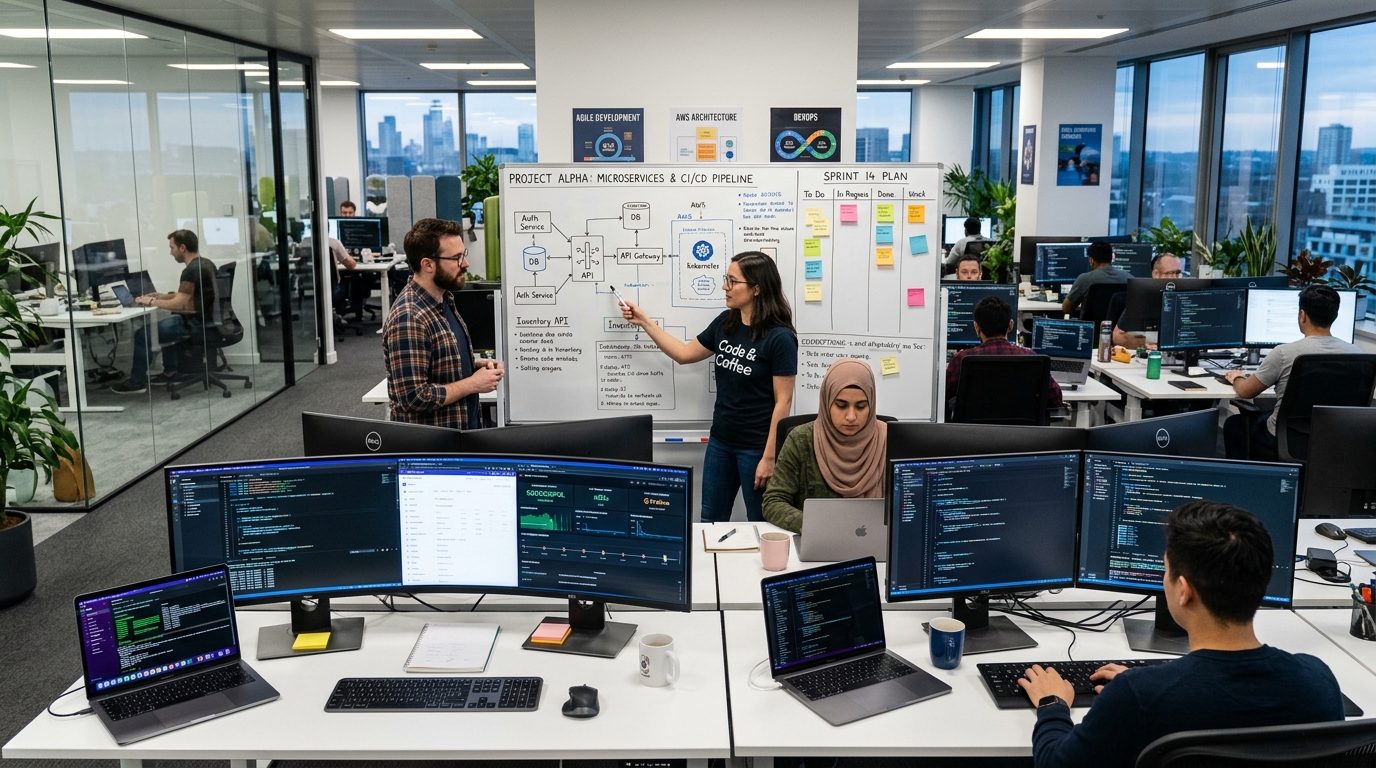
The process for building enterprise software is rigorous and iterative, involving cross-functional collaboration from the start .
1. Strategic Planning and Requirements Gathering
This initial phase involves engaging business users, IT, and compliance teams to define features, integration needs, data flows, and regulatory constraints. A critical decision is often made here: what can be bought off-the-shelf versus what must be custom-built .
2. Architectural and Tech Stack Planning
Enterprise architects define data models, integration patterns, and API contracts. The choice of technology stack is strategic and must be based on both technical fit and long-term enterprise standards .
- Backend: Java with Spring Boot, Python (Django), .NET Core, or Node.js are common.
- Database: PostgreSQL, Microsoft SQL Server, or MongoDB for unstructured data, with Redis for high-speed caching.
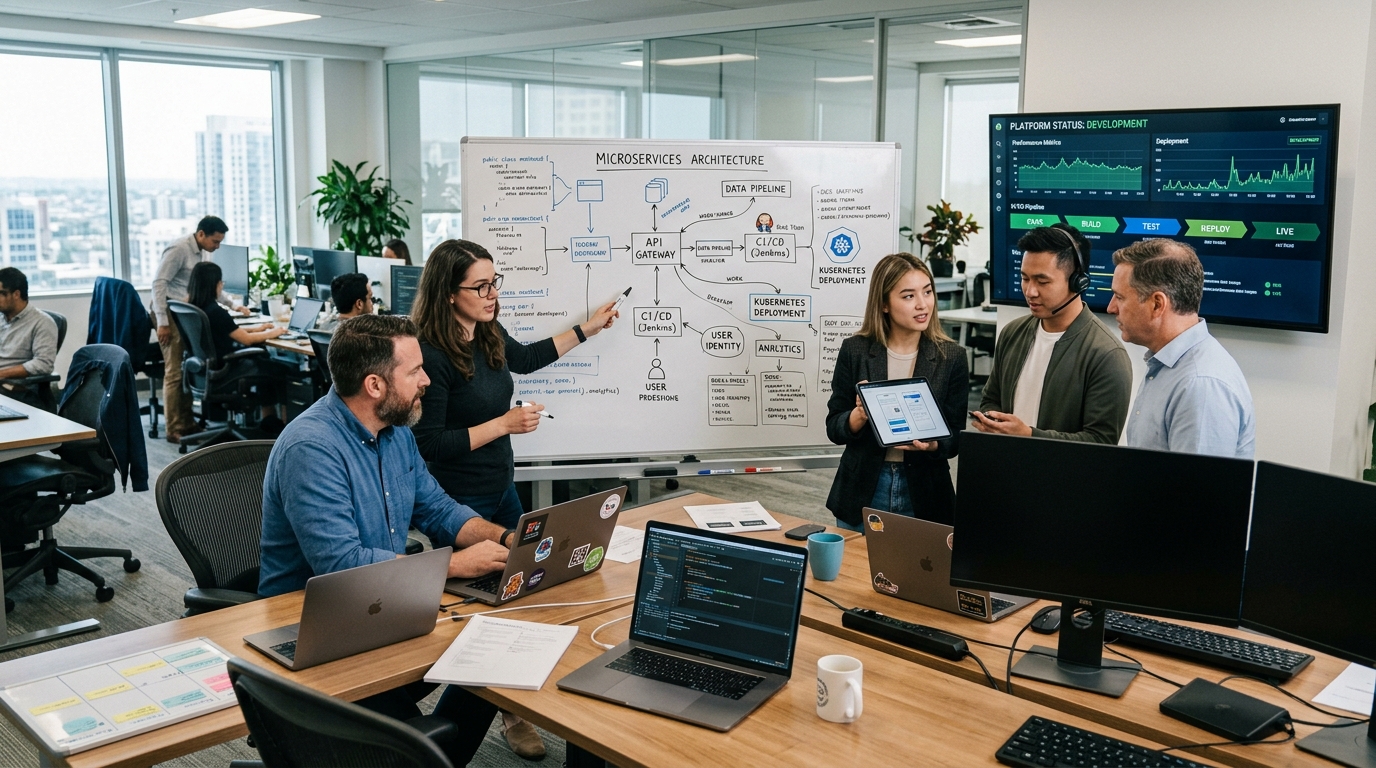
- Architecture Patterns: Moving from monolithic to microservices or event-driven architectures for better scalability, resilience, and independent team deployments .
3. Security-First and Compliance-Driven Development
Security and compliance are embedded into the development lifecycle from day one, not treated as an afterthought. This includes adhering to frameworks like OWASP Top Ten, using hardened container images, and leveraging secure vaults for secrets management .
4. Modern Development Approaches
There is no one-size-fits-all method. Teams often use a hybrid approach:
- Low-Code/No-Code: Accelerates development of internal tools and simple workflows, empowering business users while maintaining governance .
- Full-Code: Used for building complex, highly performant, or deeply customized core components where complete control is needed.
- AI-Assisted Development: Leveraging generative AI to generate app scaffolding, automate test case creation, and streamline documentation .
5. Rigorous Testing and Quality Assurance
A "shift-left" testing strategy is essential, where testing begins early and is performed frequently. This includes unit, integration, performance, security, and user acceptance testing (UAT) . For critical systems, chaos engineering may be used to test resilience under failure .
6. Deployment and Change Management
Automated CI/CD pipelines manage deployments, ensuring each release is approved, versioned, auditable, and reversible. For user-facing updates, rollouts are coordinated with training and documentation . Monitoring is set up immediately to track uptime, response times, and error rates .
Key Architectural Patterns and Trends

Monolithic vs. Microservices
- Monolithic: A single codebase is simpler to develop and test initially but becomes a bottleneck for scaling and independent team work as the system grows .
- Microservices: Breaking the application into small, independent services that can be developed, scaled, and deployed separately. This is the preferred pattern for large, complex systems, as it enables team autonomy and resilience . PHP, due to its "shared nothing" architecture, is particularly well-suited for horizontal scaling in such environments .
Platform Engineering
This trend involves creating an internal developer platform (IDP) that provides development teams with self-service tools, standardized environments, and "golden paths" for common workflows. This abstracts away infrastructure complexity, accelerates delivery, and enforces governance and security .
CI/CD (Continuous Integration and Continuous Delivery)
CI/CD is not just a practice but a fundamental requirement. It automates the integration of code changes and their deployment to production. This reduces manual errors, enables faster release cycles, and ensures that applications are constantly tested and secure .
Common Use Cases
Enterprise applications span a wide range of business functions :
- Finance Dashboards: Provide real-time visibility into revenue, costs, and profit margins.
- HR Portals: Allow employees to manage personal details, request leave, and view pay stubs.
- Procurement Workflows: Digitize the process of requesting, approving, and ordering goods.
- Customer Onboarding: Guide new customers through the collection and verification process.
- Regulatory Compliance Tracking: Centralize tasks, audits, and documentation for compliance.
Conclusion
Enterprise software development is a high-stakes discipline that requires a deep understanding of business processes, a commitment to security and quality, and a robust technical architecture. By adopting modern practices like microservices, CI/CD, platform engineering, and hybrid development approaches, organizations can build systems that are not only reliable and scalable but also adaptable to the ever-changing demands of the global business landscape